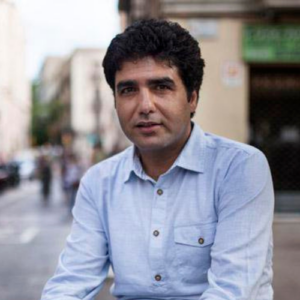
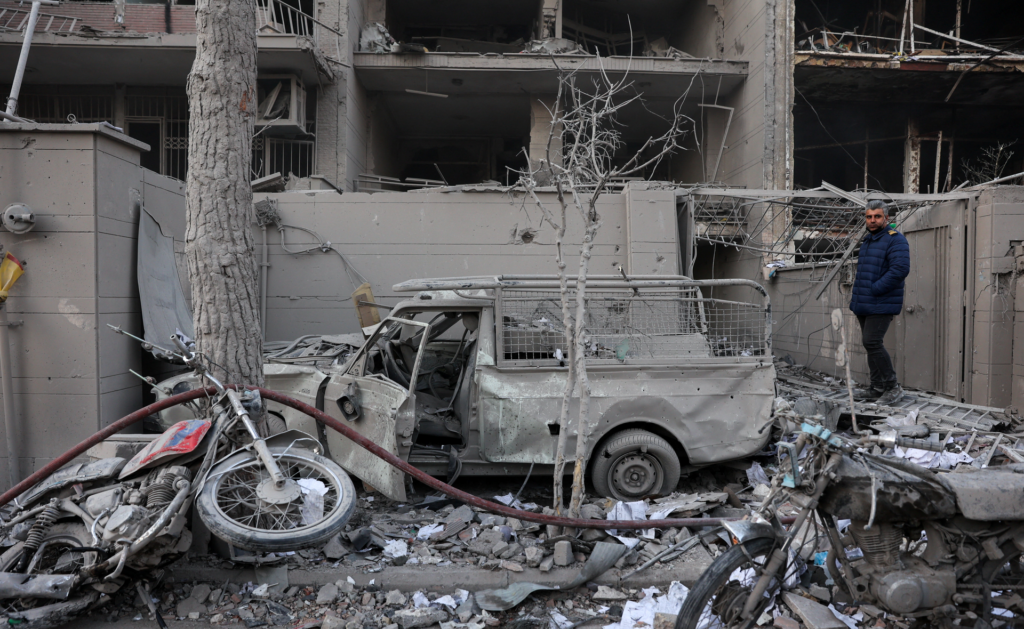
Massoud Sharifi, a professor on the Inter-university Master’s Degree in Contemporary Migration who dedicates his research to understanding social dynamics in the Middle East, was invited by 3CatInfo News to provide his analysis of the United States and Israeli attack on Iran.
During his intervention, Professor Sharifi analysed the genesis of the regime and warned that growing economic, political, and social pressures had already generated a situation of cyclical crises within the country even before the attacks. According to the expert, the wartime scenario has deepened this state crisis and widened the gap between state power and the citizenry, David-feeding a widespread perception of vulnerability and uncertainty regarding the future.
Regarding Iran’s political and economic future, the researcher underlined the system’s capacity for resilience. In this sense, he noted that the fall of its leader does not necessarily imply the end of the regime in the short term, as the characteristics of its power structure allow it to maintain control over the hard core and avoid immediate internal fractures.
Finally, Sharifi emphasised that any transition process faces a critical obstacle: the absence of an alternative leadership capable of uniting a currently fragmented population and opposition. Although he highlighted the maturity, courage, and high level of politicisation among Iranian youth in building a new society, he concluded that the greatest challenge lies in the lack of an organised structure capable of spearheading real political change.
Massoud Sharifi
Professor on the Inter-university Master’s/Postgraduate Diploma in Contemporary Migration. PhD in Sociology – UAB