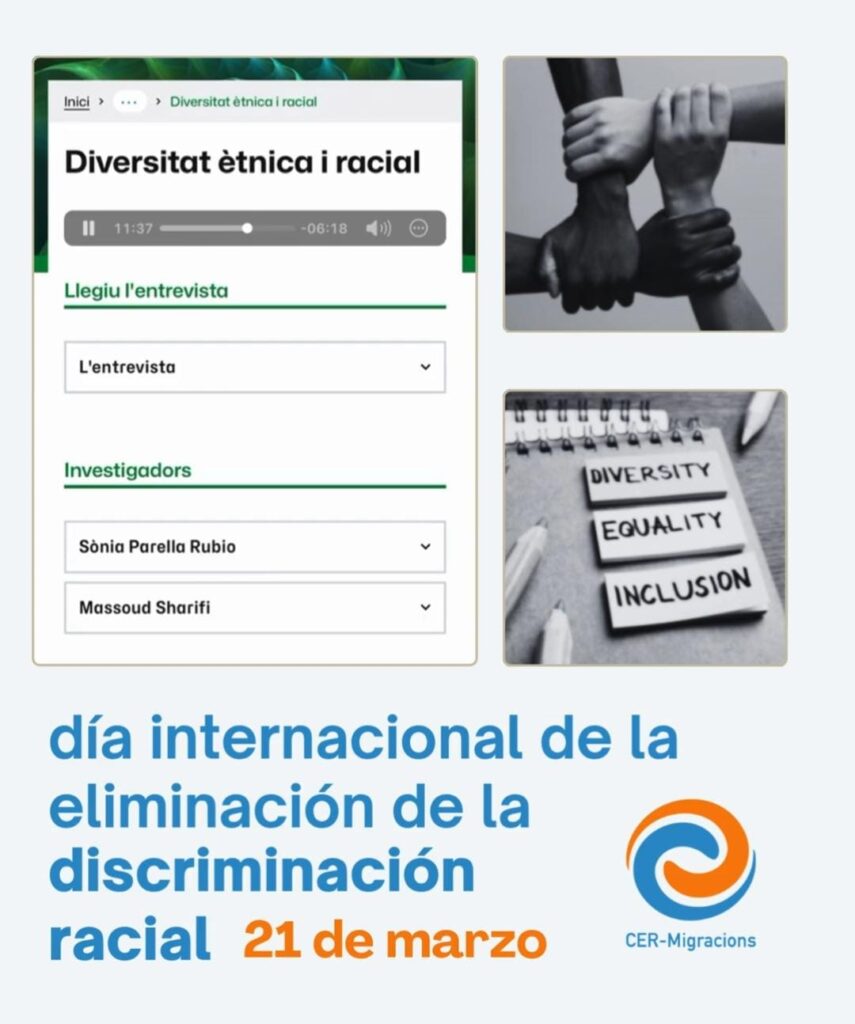
To mark the International Day for the Elimination of Racial Discrimination, we highlight a recent episode of El Vagó de la Ciència, a podcast that serves as an outreach platform for the Autonomous University of Barcelona (UAB). In this episode, sociologists and researchers Sònia Parella and Massoud Sharifi delved into the complexity of ethnic and racial diversity.
On this occasion, both experts agreed that while “race” lacks a biological basis in modern science, it holds crucial sociological relevance. According to Sharifi, race is a fluid social construct, rooted in historical processes and power relations that impose categories of superiority or inferiority between groups.
During the conversation, Massoud Sharifi highlighted the fundamental difference between race and ethnicity, defining the former as a category imposed from the outside to monopolise resources, whereas ethnicity is linked to self-identification and shared cultural values. Furthermore, he noted that migration — representing 3.7% of the world’s population — acts as a driver that transforms these categories, triggering processes of racialisation that directly influence politics, rights, and the allocation of resources in today’s societies.
For her part, Sònia Parella emphasised that racialisation is a relational concept that affects society as a whole, not just minorities. She explained that this process creates hierarchies that benefit the dominant group through various forms of racism, such as xenophobia or Islamophobia. Parella warned of the danger of reducing diversity to a mere “aesthetic celebration”, pointing out that if public policies do not address structural inequality and power asymmetries, it will be impossible to move towards genuine social cohesion.
Finally, the researchers underlined the importance of analysing these dynamics from an intersectional perspective, where race intersects with social class, gender, and age. Parella placed particular emphasis on the situation of the new generations born in Spain to foreign families — nearly 2.65 million people — warning that their successful integration depends on combatting the prejudices that still weigh upon them. The interview concluded with a call to research and act upon discrimination in areas such as employment and housing to guarantee a more equal society.
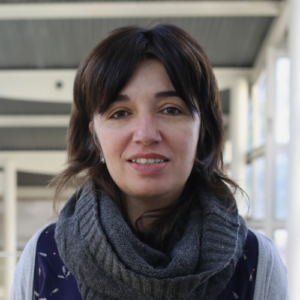
Sònia Parella
Profesora del Máster/Diplomado Interuniversitario en Migraciones Contemporáneas
Directora del CER-Migracions y del GEDIME – UAB
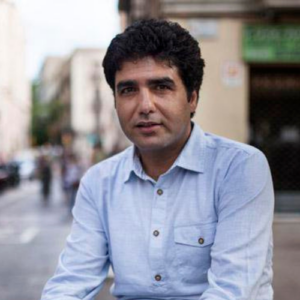
Massoud Sharifi
Profesor del Máster/Diplomado Interuniversitario en Migraciones Contemporáneas
Doctor en Sociología – UAB
Investigador del CER-Migracions